It is catholic and apostolic---We who are invited and gathered are sent to share the good news and feed the hungry. Our apostolic mission is universal. It excludes no one. No one is outside the possibility of GOD”S saving grace. No one is outside the possibility of becoming part of CHRIST’s body. Worship is catholic when its scope is universal. That is, when it does not cater to the preferences of a homogeneous group, but is cast in broader strokes. Catholic worship is expressed through variety and embraces new and old, familiar and unfamiliar, ancient and modern, music and silence. Worship that is not catholic is narrowly defined in its language and practice. It is characterized by a dull uniformity to the likes/expressions of the few, rather than expansive worship expressions of the many.
Apostolic worship is missional and inspires a lifestyle outside of the four walls of the church building and the 1 ½ hours of weekly worship. Worship that is not apostolic only satisfies the inner needs of the self, without inspiring service.
Tuesday, October 24, 2006


What I believe about Christian Worship, pt. 2
It is sacramental---That is it mediates the spiritual presence of God by actual physical means. We believe that GOD is truly present in the crucified yet living, resurrected body of JESUS made visible and edible in the sacrament. We remember Jesus when we eat the bread that is HIS body and drink the wine that is HIS blood. We are washed, drowned, revived, refreshed in the waters of Baptism. The sacramental character of worship is personal---it is expressed in daily living. Every day we are renewed, remade by GOD. Every day GOD nourishes us. Faith tells us this is true. Worship reflects this truth.
Sacrament is invitational---we are invited to the table freely and openly because JESUS welcomes us to meet HIM there. We are invited to the waters of Baptism because JESUS commissions us to “Go, make disciples of all nations, baptizing them in the name of the FATHER, and of the SON, and of the HOLY SPIRIT…”. That GPD chooses to invite is historically obvious. Why and who and when GOD chooses to invite is a mystery. So too the presence of GOD in sacrament is a mystery we cannot fathom by reason, but only by faith—a blind trust in HIS promise recorded in Scripture. When the table includes everybody and the baptismal life is offered to those who do not know GOD, we are sacramental.
Sacrament is invitational---we are invited to the table freely and openly because JESUS welcomes us to meet HIM there. We are invited to the waters of Baptism because JESUS commissions us to “Go, make disciples of all nations, baptizing them in the name of the FATHER, and of the SON, and of the HOLY SPIRIT…”. That GPD chooses to invite is historically obvious. Why and who and when GOD chooses to invite is a mystery. So too the presence of GOD in sacrament is a mystery we cannot fathom by reason, but only by faith—a blind trust in HIS promise recorded in Scripture. When the table includes everybody and the baptismal life is offered to those who do not know GOD, we are sacramental.
What I believe about Christian Worship, pt. 1
It is evangelical---the core of it is the message of the gospel, the good news proclaimed by JESUS. Contained in this message is hope, love, peace, joy, new life, forgiveness, freedom, justice, rescue. This message is radically inclusive. No one is excluded. Everyone is invited to hear, see, believe and live. Mark’s JESUS embraces Jew and Gentile. Matthew’s JESUS embraces the nations. Luke’s JESUS is the savior of the world who inspires witnesses from Jerusalem to the ends of the earth. And John’s JESUS is the savior of the cosmos. It comes to us as a promise from GOD for all humanity. It comes with a commission to its hearers and believers---to share this message with all humanity. Evangelical worship inspires evangelical living. We are called to bear Jesus’ message in the world for the sake of all people. Worship must reflect this radically inclusive gospel. This inclusivity is expressed in hospitality. We invite and welcome all by what we do together in worship. If we do not welcome and invite all, we are not evangelical.
Apples and Community
On Saturday, nine of us joined 180 other people in an apple orchard in Lebanon County. For over two hours we picked fallen apples off the ground and bagged them up to be taken to the central PA food bank, among other places where the needy are not forgotten. Several church youth groups, adult volunteers and teens, spent their Saturday morning on a crisp fall day serving hungry people they would never see. The event coordinator invited me to address the group and pray before we began gleaning. I reminded the group that the agricultural practice of gleaning is biblical, found in Deuteronomy. The LORD commanded the farmers to leave a portion of their produce for the poor, the widows, and the orphans so that they might not be neglected in the harvest. The first fruits that the farmer picked, a tenth or tithe, was also dedicated to God for the priests to eat. So the LORD got the firsts and the poor got the required leftovers. I prayed for the orchard-owners who generously shared their bounty. I blessed God for abundantly providing. I commended the poor and hungry into the hands of the compassionate God who feeds us all. After that, we started gleaning on hands-and-knees. Some picked faster than others. A veteran harvester like me could pick six or seven times faster than some of the teens. In the end, we all participated. I met some people there. On the back of an old ford pickup truck, I met two teenage girls who attend Trinity Lutheran in Lebanon. One of them is a student at Cedar Crest middle school, where my wife taught before our boys were born. My wife taught her older sister. I made sure to get their names to tell my wife that I met the sister of a former student. It’s fun to make connections.
After we picked apples and loaded them onto trucks and wagons, we stopped by the farmer’s store for some apple cider and cookies. Then we drove to camp Kirchenwald for a picnic lunch and a hike to a favorite spot. It was a beautiful fall day. We picnicked under the pavilion. Then we hiked out to Buzzard’s rocks, a place like Devil’s den in Gettysburg, where large boulders make for fun climbing. Along the way there we missed a turn and bumped into two hunters. We tracked back to the left turn and finally made our way to the rocks. The kids climbed. We watched. I sat down atop one of the large boulders. As I sat there, about a mile from camp I gazed down at the rock to see a name etched in it. It was the name of the girl I met at the orchard followed by ’06. There were 186 gleaners. I knew one new name, the name of the sister of one of my wife’s former students. She is a 7th grade Lutheran. At some point in the past, she had climbed that rock with a youth group, a church group, a summer camp cabin group, a family, and written her name. When had she been there? Why is it that I met her and found her name at Buzzard’s rock? What forces are at work to create such a coincidence? The church, the people of God who serve and live in the name of Jesus, is a family. We travel along the same pathway. We journey together. We seek the same God, the same justice, the same grace. We work in the same valley and climb the same rocks. We share the same bread and cup, hear the same Word. And every once-in-awhile we are reminded how good it feels to be in relationship with these people who belong to Jesus and share His dream of a new creation. With love, Pastor Matt
After we picked apples and loaded them onto trucks and wagons, we stopped by the farmer’s store for some apple cider and cookies. Then we drove to camp Kirchenwald for a picnic lunch and a hike to a favorite spot. It was a beautiful fall day. We picnicked under the pavilion. Then we hiked out to Buzzard’s rocks, a place like Devil’s den in Gettysburg, where large boulders make for fun climbing. Along the way there we missed a turn and bumped into two hunters. We tracked back to the left turn and finally made our way to the rocks. The kids climbed. We watched. I sat down atop one of the large boulders. As I sat there, about a mile from camp I gazed down at the rock to see a name etched in it. It was the name of the girl I met at the orchard followed by ’06. There were 186 gleaners. I knew one new name, the name of the sister of one of my wife’s former students. She is a 7th grade Lutheran. At some point in the past, she had climbed that rock with a youth group, a church group, a summer camp cabin group, a family, and written her name. When had she been there? Why is it that I met her and found her name at Buzzard’s rock? What forces are at work to create such a coincidence? The church, the people of God who serve and live in the name of Jesus, is a family. We travel along the same pathway. We journey together. We seek the same God, the same justice, the same grace. We work in the same valley and climb the same rocks. We share the same bread and cup, hear the same Word. And every once-in-awhile we are reminded how good it feels to be in relationship with these people who belong to Jesus and share His dream of a new creation. With love, Pastor Matt
Thursday, October 05, 2006
In response to the Amish community tragedy
This week, a single gunman and a father of three kids, entered a one-room Amish schoolhouse and executed 5 girls before killing himself. As these childrens' families grieve and the Amish community mourns this tragedy, how must we respond?
IN Christian love, we mourn and weep with them. In Christian hope we commend these 5 children into the arm of thier loving Father in heaven. In Christian peace, we forgive the man---Charles Roberts---and release HIm into the hands of the forgiver.
How do we protect our kids? Perhaps if we teach tolerance and compassion for all people. Perhaps if we teach that violence is never a solution to a problem. Perhaps if we listen to the pain in the lives of adult neighbors and offer grace to them. This was not the work of one madman. This was the work of a broken community in need. And until we begin to reach one another with compassion and peace, there will be no safety.
Can it be done? The church asks that question and attempts to live an affirmative response. But it is not a perfect affirmation. Not all Christian people are good or safe or compassionate. But the Lord who teaches and demonstrate these things is. I can only be faithful to Jesus and be helpful to my neighbor. Beyond this, I have no control.
IN Christian love, we mourn and weep with them. In Christian hope we commend these 5 children into the arm of thier loving Father in heaven. In Christian peace, we forgive the man---Charles Roberts---and release HIm into the hands of the forgiver.
How do we protect our kids? Perhaps if we teach tolerance and compassion for all people. Perhaps if we teach that violence is never a solution to a problem. Perhaps if we listen to the pain in the lives of adult neighbors and offer grace to them. This was not the work of one madman. This was the work of a broken community in need. And until we begin to reach one another with compassion and peace, there will be no safety.
Can it be done? The church asks that question and attempts to live an affirmative response. But it is not a perfect affirmation. Not all Christian people are good or safe or compassionate. But the Lord who teaches and demonstrate these things is. I can only be faithful to Jesus and be helpful to my neighbor. Beyond this, I have no control.
The Inheritance
“Good teacher, what must I do to inherit eternal life?” Mark 10:17b
We all ask that question one way or another. Is there life after death---whatever that death may be. Is there life after a divorce? After a loss of job or physical ability? What is life without one’s mental faculties? Is there life after one moves out of one’s home? Is there life after high School or college or retirement? What rich, deep meaning does my life have in the cosmos? And how do I get it? How do I come to understand the legacy of meaning for which I was born and lived? Try to avoid these questions. Eventually, some event in life will strike you like a cold gust of wind in February and you will hear this question or something like it burning in your heart and mind, longing for resolution. Ultimately, the question means, how do I come to grips with the ultimate losses in life when I cannot control them or hinder them from coming? Isn’t there some way that I can control my own fate, resolve to make a life for myself after death? What is my life’s meaning?
The answer is not easy. Jesus says its hard. For us, who control as much as we can, holding on to every vestige of dignified self-power we believe we have, this is NOT EASY.
What does Jesus say? Childhood obedience is not enough because it doesn’t get to the heart of the matter. What does is to give up. To surrender what you are clinging to. Give it to someone else. If its money, give it to the poor. If it’s work, retire or seek another vocation. If it’s travel, stay still. If it’s your family, spend some time alone. What we think is fulfilling us is usually emptying us of what we truly need. You get what you need when you leave it all behind. This kind of reverse logic is counterintuitive, seemingly counterproductive, certainly countercultural. Leave it all behind? But I’ve worked so hard for…
Nevertheless, doing so is the key to the inheritance. The question is, do you want to inherit what you do not deserve, what you cannot earn, and what, in spite of that, has been promised to you? Or are you satisfied with life as it is? I doubt you can truthfully affirm the latter question. More likely, you know that this is not all there is because you live with hope. I am unsatisfied, too. And I know that my feeble attempts to placate my hunger for more will simply create more emptiness. What I need is Jesus’ loving encouragement. Give it up. Don’t try so hard to make your own life meaning. With God, life is endless possibility waiting to be discovered yb those willing to watch and wait and listen for God. With love, PM
We all ask that question one way or another. Is there life after death---whatever that death may be. Is there life after a divorce? After a loss of job or physical ability? What is life without one’s mental faculties? Is there life after one moves out of one’s home? Is there life after high School or college or retirement? What rich, deep meaning does my life have in the cosmos? And how do I get it? How do I come to understand the legacy of meaning for which I was born and lived? Try to avoid these questions. Eventually, some event in life will strike you like a cold gust of wind in February and you will hear this question or something like it burning in your heart and mind, longing for resolution. Ultimately, the question means, how do I come to grips with the ultimate losses in life when I cannot control them or hinder them from coming? Isn’t there some way that I can control my own fate, resolve to make a life for myself after death? What is my life’s meaning?
The answer is not easy. Jesus says its hard. For us, who control as much as we can, holding on to every vestige of dignified self-power we believe we have, this is NOT EASY.
What does Jesus say? Childhood obedience is not enough because it doesn’t get to the heart of the matter. What does is to give up. To surrender what you are clinging to. Give it to someone else. If its money, give it to the poor. If it’s work, retire or seek another vocation. If it’s travel, stay still. If it’s your family, spend some time alone. What we think is fulfilling us is usually emptying us of what we truly need. You get what you need when you leave it all behind. This kind of reverse logic is counterintuitive, seemingly counterproductive, certainly countercultural. Leave it all behind? But I’ve worked so hard for…
Nevertheless, doing so is the key to the inheritance. The question is, do you want to inherit what you do not deserve, what you cannot earn, and what, in spite of that, has been promised to you? Or are you satisfied with life as it is? I doubt you can truthfully affirm the latter question. More likely, you know that this is not all there is because you live with hope. I am unsatisfied, too. And I know that my feeble attempts to placate my hunger for more will simply create more emptiness. What I need is Jesus’ loving encouragement. Give it up. Don’t try so hard to make your own life meaning. With God, life is endless possibility waiting to be discovered yb those willing to watch and wait and listen for God. With love, PM
Wednesday, September 20, 2006
members versus disciples
Zion is a congregation, primarily of members. Our memebership is not large. Like most mainline churches, it is declining. We are worried about this trend. If membership declines too far we will not be able to survive as an institution.
We are part of an institution. As such, we have established operating principles of governance and practice that have evolved into something less than 'church'. What I mean by that is that the church is called to make disciples of Jesus Christ, not congregation members. There is a significant difference that ought to be identified.
However, most of the people we serve identify with congregation, rather than with Jesus. Their primary faith relationship is the congregation, not the crucified and risen Lord in whose grace we live. They are attached to this or that congregation as supporters/donors/ volunteers. But they are not Jesus' disciples.
Membership means that we pay the bills, that we hire staff to do ministry, that we live to ourselves, that we maintain the building, that mission work is something others do far away from us, to whom we may send some money. Members serve on committees and councils in order to allocate funds to perpetuate membership and maintenance. Membership has few if any expectations attached to it. These expectations are low, because people won't join if the expectations are too high. Members must commune and contribute once every two years! Most social clubs and sports teams have higher expectations today. Why have we relinquished the mission to make disciples?
Discipleship means that we are in the center of a mission field to which each of us is called as a servant and minister. We give in grateful response to what God has given us. In fact, expectations are high because the mission is both urgent and important. How we practice what we believe, how we live out our relationship with Jesus as disciples is critical to the mission. We are called to be faithful; to live a life worthy of the calling to which we have been called. That means we are called to worship every week, to daily bible reading and prayer, to generous giving, to service in neighborhood and community, to advocate for a just and peaceful world, and to a ministry of reconciliation and forgiveness that welcomes all people.
How do members become disciples? We start by asking the question, "Who is Jesus for me, for us, for the world?" We explore the life of Jesus. We pray. Disciples are made. There is work involved; proclamation, prayer, invitation, encouragement. It is transformative work that will not let you go until your life is changed by the spirit of Jesus and the gospel of grace. When that happens a disciple is born.
We are part of an institution. As such, we have established operating principles of governance and practice that have evolved into something less than 'church'. What I mean by that is that the church is called to make disciples of Jesus Christ, not congregation members. There is a significant difference that ought to be identified.
However, most of the people we serve identify with congregation, rather than with Jesus. Their primary faith relationship is the congregation, not the crucified and risen Lord in whose grace we live. They are attached to this or that congregation as supporters/donors/ volunteers. But they are not Jesus' disciples.
Membership means that we pay the bills, that we hire staff to do ministry, that we live to ourselves, that we maintain the building, that mission work is something others do far away from us, to whom we may send some money. Members serve on committees and councils in order to allocate funds to perpetuate membership and maintenance. Membership has few if any expectations attached to it. These expectations are low, because people won't join if the expectations are too high. Members must commune and contribute once every two years! Most social clubs and sports teams have higher expectations today. Why have we relinquished the mission to make disciples?
Discipleship means that we are in the center of a mission field to which each of us is called as a servant and minister. We give in grateful response to what God has given us. In fact, expectations are high because the mission is both urgent and important. How we practice what we believe, how we live out our relationship with Jesus as disciples is critical to the mission. We are called to be faithful; to live a life worthy of the calling to which we have been called. That means we are called to worship every week, to daily bible reading and prayer, to generous giving, to service in neighborhood and community, to advocate for a just and peaceful world, and to a ministry of reconciliation and forgiveness that welcomes all people.
How do members become disciples? We start by asking the question, "Who is Jesus for me, for us, for the world?" We explore the life of Jesus. We pray. Disciples are made. There is work involved; proclamation, prayer, invitation, encouragement. It is transformative work that will not let you go until your life is changed by the spirit of Jesus and the gospel of grace. When that happens a disciple is born.
Tuesday, September 19, 2006
What if...
What if's...is there a point to them? Rather than dismiss them, I believe that Christians are called to imagine them with boldness, with the "mind of Christ". Ought we not to imagine God's future and find ways to approach it in our own time?
What if this were a time in which God were about to do a new thing among us here? What if this were a time in which the Spirit of Jesus would become more evident within us? What if this were a time when we are called upon to live out our hope for a more just world, a world governed by something like the reign of God?
What if the biblical narrative, the story of what God does for people through Jesus, becomes our story? What if we embrace the truth that we are indeed rescued and freed from the bondages of sin, in order to freely love others? What if we believed in community life as a principle for living authentic human lives? What if we were to advocate that a creative and loving God, a God hell bent on loving humanity, does not wage war or choose sides in our human ones? What if we believed in a God whose future is peaceful? What if we chose to live into that future?
What if today were that turnaoround moment for you, when you come to your senses and believe in the possibilities brought about by the life and death and resurrection of Jesus?
What if you drank coffee that promised someone somewhere a slightly better life? What if you simplified in order to make a healthier planet and a fairer economy for others just because it is right to make people's lives better?
What if?
What if this were a time in which God were about to do a new thing among us here? What if this were a time in which the Spirit of Jesus would become more evident within us? What if this were a time when we are called upon to live out our hope for a more just world, a world governed by something like the reign of God?
What if the biblical narrative, the story of what God does for people through Jesus, becomes our story? What if we embrace the truth that we are indeed rescued and freed from the bondages of sin, in order to freely love others? What if we believed in community life as a principle for living authentic human lives? What if we were to advocate that a creative and loving God, a God hell bent on loving humanity, does not wage war or choose sides in our human ones? What if we believed in a God whose future is peaceful? What if we chose to live into that future?
What if today were that turnaoround moment for you, when you come to your senses and believe in the possibilities brought about by the life and death and resurrection of Jesus?
What if you drank coffee that promised someone somewhere a slightly better life? What if you simplified in order to make a healthier planet and a fairer economy for others just because it is right to make people's lives better?
What if?
God's Word in Worship

September 24, 2006
Pentecost 16
Jeremiah 11:18-20
Psalm 54
James 3:13-4:3,7-8a
Gospel: Mark 9:30-37
Jesus says "Whoever welcomes a little child, welcomes me; and whoever welcomes me welcomes the one who sent me." Jesus is saying that to welcome a child is to welcome God himself. Amazing to think that Jesus esteemed children so highly.
Wednesday, September 13, 2006
Link of the Week
Youth faith lens is a weekly lectionary devotional for teens. It connects to daily life with stories and humor. There are good questions. This week it asks, "How do famous people get to be known?" It ties in with the gospel of Mark and Jesus' question to the disciples: "Who do you say that I am?"
If you are a teen interested in a simple way to explore your faith in God, click n faith lens and follow the reading there. I get ideas for sermons, bible studies, blog posts from there, too. Check it out.
God's Word in Worship
September 17 2006
Pentecost 15
Isaiah 50:4-9a
Psalm 116:1-9
James 3:1-12
Gospel: Mark 8:27-38

Dear Confirmands,
We begin anew in October. As you see below, there are several learning events scheduled for this year. Confirmation day is May 27th, 2007, the Day of Pentecost. It is especially important that 9th graders attend every event before confirmation day. Please bring your bibles, notebooks, and Lutheran Handbooks to every event. The winter retreat and field trip will be announced to you in November. There will also be some Sunday afternoon events sponsored by Holy Trinity to which we are invited. Confirmation is about faithfulness. It is about your answer to God’s faithfulness. God is faithful to you in so many ways. Did you wake up today? Did you have food to eat? Air to breathe? A family? Friends? A Home? Jesus was faithful enough to die for the world. The Spirit of Jesus dwells in you, inspiring you to live faithfully too. Confirmation is about faithfulness. Being faithful means coming to worship every week. It means participating; on Sunday mornings, at learning events, at service opportunities. It means asking questions, praying, giving, and helping others. BE FAITHFUL. And the LORD be with you each and every day.
In Christ’s love,
Pastor Matt
Event Dates Times EVENT THEMES
October 22nd--- 12:30-3:30 pm JESUS
November 19th--- 12:30-3:30 pm WORSHIP
December 10th? MOVIE: The Nativity Story; in theatres
February TBA LUTHER RETREAT
March TBA FIELD TRIP
April 29 12:30-3:3o BAPTISM AND VOCATION
May 8 12:30-3:30 WHAT”S NEXT? YOU ARE CHURCH
May 27 The Day of Pentecost and confirmation
Tuesday, September 12, 2006
Life this week

Wednesday is bible study at 7:00 am, Zion Akron and 7:30 pm, Holy Trinity Ephrata.
Thursday is the bishop's annual convocation. Holy cross day.
Thursday night is Worship and Music team.
Sunday is the church picnic and worship in the park.
9/11
Monday was the Anniversary of the September 11, 2001 terrorist attacks that killed close to 3,000 Americans. Its a day none of us can forget. Its a day we hate to remember. Since then the U.S. has engaged in a retaliatory war in Iraq and Afghanistan. Are we safer? Is the world more peaceable?
I believe that the post 9/11 world required of the U.S. a response unlike any other in history. I believe the global response ought not to have been a military one. It ought to have been a response of empathy and humanitarianism. 9/11 de-isolated the U.S. from the global experience of preventable, innocent death. What I mean to say is that the U.S. is not the recipient, not the importer of injustice and devastating disease. The U.S. is the perpetrator and exporter of these things in ways of which most of us are unaware. Understand me,I'm not saying that "we"or anyone deserved the terror of 9/11. I'm saying that it happened as a result of global disparities that cannot be easily resolved. The ensuing struggle to achieve balance of power results in terror and retaliation. but it didn't have to.
What if the president had actually resolved to care for the world by sending an unprecedented amount of aid and relief to developing nations? What if he said that the U.S. is weeping with those who weep and mourning with those who mourn? What of our nations' grief was not viewed by us as some personal experience unshared by other nationsand rather realized thatwe were sharing in the collective experience of billions of people around the world?
I am devastated by the report that over 6,000 Africans dies daily from AIDS. Everyday the continent experiences two 9/11 tragedies. Since 9/11 the war on terror has claimed the lives of as many Americans and five times as many Iraqis.
What if we were determined to beat our swords into ploughshares? What if we were resolved to improve the lives of poor children? Maybe that would bring peace. If the U.S. were to turn the other cheek and give until it hurt, what would that do on a global scale?I'm not against defending ourselves. I'm merely for serving others first.
I believe that the post 9/11 world required of the U.S. a response unlike any other in history. I believe the global response ought not to have been a military one. It ought to have been a response of empathy and humanitarianism. 9/11 de-isolated the U.S. from the global experience of preventable, innocent death. What I mean to say is that the U.S. is not the recipient, not the importer of injustice and devastating disease. The U.S. is the perpetrator and exporter of these things in ways of which most of us are unaware. Understand me,I'm not saying that "we"or anyone deserved the terror of 9/11. I'm saying that it happened as a result of global disparities that cannot be easily resolved. The ensuing struggle to achieve balance of power results in terror and retaliation. but it didn't have to.
What if the president had actually resolved to care for the world by sending an unprecedented amount of aid and relief to developing nations? What if he said that the U.S. is weeping with those who weep and mourning with those who mourn? What of our nations' grief was not viewed by us as some personal experience unshared by other nationsand rather realized thatwe were sharing in the collective experience of billions of people around the world?
I am devastated by the report that over 6,000 Africans dies daily from AIDS. Everyday the continent experiences two 9/11 tragedies. Since 9/11 the war on terror has claimed the lives of as many Americans and five times as many Iraqis.
What if we were determined to beat our swords into ploughshares? What if we were resolved to improve the lives of poor children? Maybe that would bring peace. If the U.S. were to turn the other cheek and give until it hurt, what would that do on a global scale?I'm not against defending ourselves. I'm merely for serving others first.
Tuesday, September 05, 2006
God's Word in Worship
September 10, 2006
Pentecost 14
Isaiah 35:4-7
Psalm 146
James 2:1-17
Gospel: Mark 7:24-37
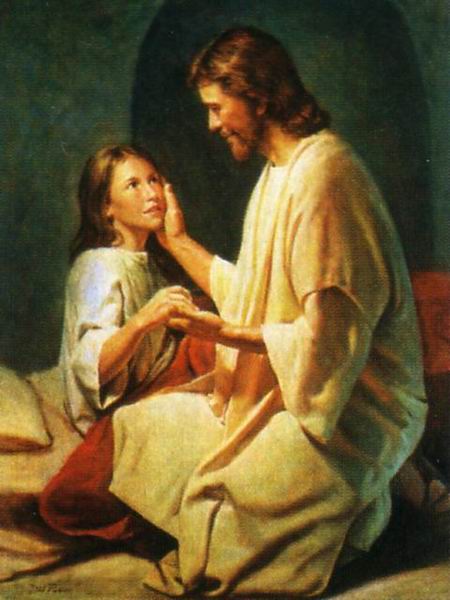
Jesus heals the demon-possessed daughter of a Syrophoenician woman.
Thursday, August 31, 2006
Nicholas

On Sunday, September 3rd we will witness and partake in what can best be described as a close encounter. On Sunday, God will act upon one of us. God will reach in and touch the flesh of another child. That divine touch will come in the experience of water thrice splashed upon His head and words chanted above Him and for Him; "I baptize you in the name of the Father, and of the Son, and of the Holy Spirit." And although my hand will cup the water and my voice speak those words, make no mistake, it is God who is acting upon Nicholas. God is choosing to get in the water, to cleanse, to drown and rescue from drowning, to enter the deep end with this child now and forever.
As a young boy I still rememeber that cold fall day when my younger brother, no more than 6, fell into the pool and under the heavy vinyl cover. I remember my dad diving after him, into the murky, leafy mess--pushing back the cover and pulling him out. I remember the absolute fear and trauma of the event. I remember them standing there in cold, wet clothes. I remember my brother crying and my father wisking us home for further evaluation and warmth. It all happened in a brief moment. No doubt my brother remembers little of the actual experience, if not for the shared memories we employ in the occasional retelling. And yet, that moment of rescue was a holy moment, a parable of Baptism and new life. God plunges in to the murky mess of our lives and pulls us to safety, coughing and cold and wet. That is Baptism. For Nicholas, there will be little or no memory of that moment. But we will be there to witness it and to remember for Him. And perhaps in our collective retelling, he will know and believe that God resuced him on this day and for the rest of His life.
Tuesday, August 29, 2006
Our circle of prayer
These are the people on our prayer circle for the week of August 26, 2006
Gordon Becker
Jim Beck
Sylvan and Elma Eshelman
Pam Hoover
Rochelle Kopp
Jean Willwerth
Peter Nyok
Tom Smith
Karen Heyman
Becky Harker
Shirley Frey
Esther Bender
Ron, Nancy, and Justin Thompson
Helene Neumann
Gloria Mohler
Helen Reigel
Skip Kopp
Ray Singer
Billy Lied
Alex Rudy
Philip McLellan
Toni Carvelle
Jane Myers
Mike Linn
Pastor Paul Smeltz
Gordon Becker
Jim Beck
Sylvan and Elma Eshelman
Pam Hoover
Rochelle Kopp
Jean Willwerth
Peter Nyok
Tom Smith
Karen Heyman
Becky Harker
Shirley Frey
Esther Bender
Ron, Nancy, and Justin Thompson
Helene Neumann
Gloria Mohler
Helen Reigel
Skip Kopp
Ray Singer
Billy Lied
Alex Rudy
Philip McLellan
Toni Carvelle
Jane Myers
Mike Linn
Pastor Paul Smeltz
Today's quote
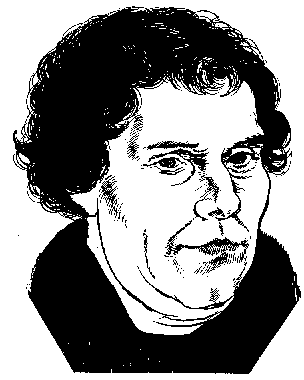
"I have tried to keep things in my hands and lost them all, but what I have given into God's hands I still possess." -Martin Luther
Monday, August 28, 2006
This week's Link
This week's link is ELCA Public Church
What is advocacy?
"Advocacy is to plead the cause of another together with them and on their behalf. When, for example, the prophets addressed kings and priests on behalf of those suffering injustice, they were advocating. The ELCA calls persons to advocate justice with and for those without power and voice in places where important political and economic decisions are being made that affect the lives of those who are marginalized. This activity is what is meant by “advocacy.” It is one way the ELCA carries out its strategic direction to “step forward as a public church that witnesses boldly to God’s love for all that God has created.”
We are called to to speak boldly and with authority on behalf of people whose voices have been silenced by oppressive, dispassionate, and ruthless killers. Where economy and government serve a minority while a majority suffers, advocates are needed. Where children starve while their parents die of HIV/AIDS, advocates are needed. Where unfair trade practices impoverish local economies and villages, advocates are needed. As members of the church we have a responsibility to serve the least of these by unting with them in their struggle for justice. The ELCA advocacy page provides you with ways to advocate on behalf of others. It also provides education regarding critical issues our society faces today. Check it out today.
What is advocacy?
"Advocacy is to plead the cause of another together with them and on their behalf. When, for example, the prophets addressed kings and priests on behalf of those suffering injustice, they were advocating. The ELCA calls persons to advocate justice with and for those without power and voice in places where important political and economic decisions are being made that affect the lives of those who are marginalized. This activity is what is meant by “advocacy.” It is one way the ELCA carries out its strategic direction to “step forward as a public church that witnesses boldly to God’s love for all that God has created.”
We are called to to speak boldly and with authority on behalf of people whose voices have been silenced by oppressive, dispassionate, and ruthless killers. Where economy and government serve a minority while a majority suffers, advocates are needed. Where children starve while their parents die of HIV/AIDS, advocates are needed. Where unfair trade practices impoverish local economies and villages, advocates are needed. As members of the church we have a responsibility to serve the least of these by unting with them in their struggle for justice. The ELCA advocacy page provides you with ways to advocate on behalf of others. It also provides education regarding critical issues our society faces today. Check it out today.
God's Word in Worship Pentecost 13
God's Word in Worship
Pentecost 13 2006
September 3rd
Deuteronomy 4:1-2,6-9
Psalm 15
James 1:17-27
Gospel: Mark 7:1-8, 14-15,21-23
Subscribe to:
Posts (Atom)